library(leaflet)

places <- data.frame(
  place = c("USMA (West Point, NY)",
            "Schofield Barracks, HI",
            "Missouri S&T (Rolla, MO)",
            "White Sands Missile Range, NM",
            "The Ohio State University (Columbus, OH)",
            "Baylor University (Waco, TX)",
            "Center for Army Analysis (Ft. Belvoir, VA)"),
  lat = c(41.391, 21.483, 37.954, 32.389, 39.999, 31.549, 38.711),
  lng = c(-73.959, -158.063, -91.774, -106.491, -83.018, -97.114, -77.147)
)

leaflet(places) |>
  addTiles() |>
  addCircleMarkers(
    ~lng, ~lat,
    radius = 6,
    color = "black",
    fillColor = "red",
    fillOpacity = 0.85
  ) |>
  addLabelOnlyMarkers(
    ~lng, ~lat,
    # label = ~place,
    labelOptions = labelOptions(
      noHide = TRUE,
      direction = "top",
      textOnly = TRUE,
      style = list("color" = "black", "font-size" = "12px", "font-weight" = "bold")
    )
)Lesson 1: Intro and Preliminaries
Welcome!

Let’s Pick A Section Marcher
Introductions
Cadet Introductions
Please Share:
- Name
- Hometown
- Company
- Birthday
- Did you come directly from high school?
- Academic Major
- What you do in the Corps (Sport, Club, etc)
- Favorite sports team
- Possible Branch
- Why you picked your seat today
CDT Dusty Turner: Center Point, Texas
- Sandhurst
- OCF
- F4
- Dallas Cowboys, San Antonio Spurs, Texas Rangers
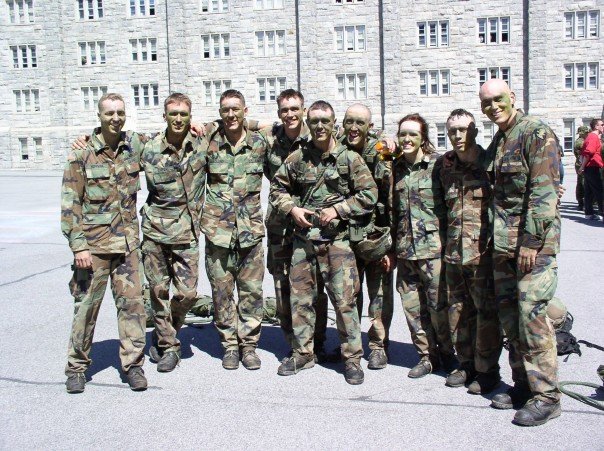
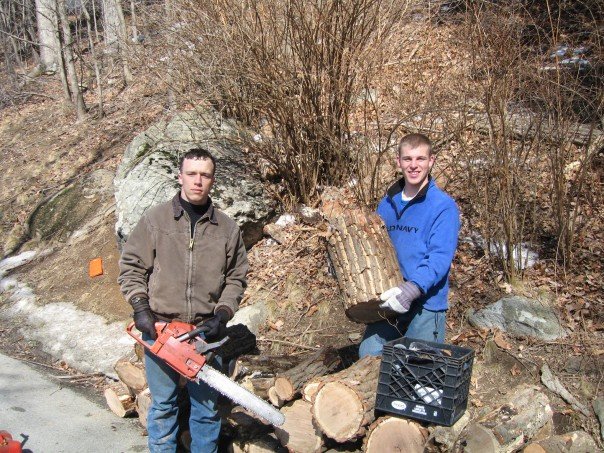
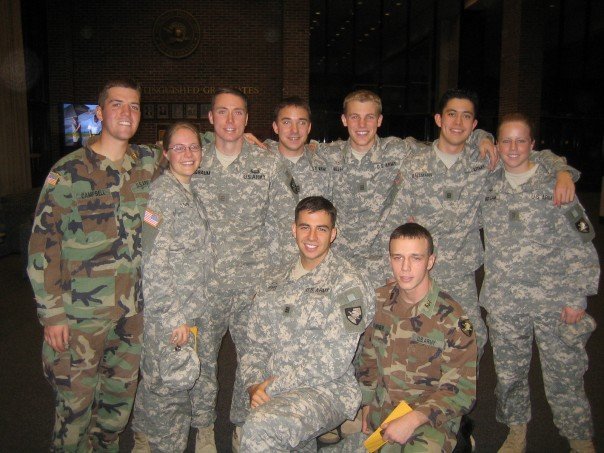
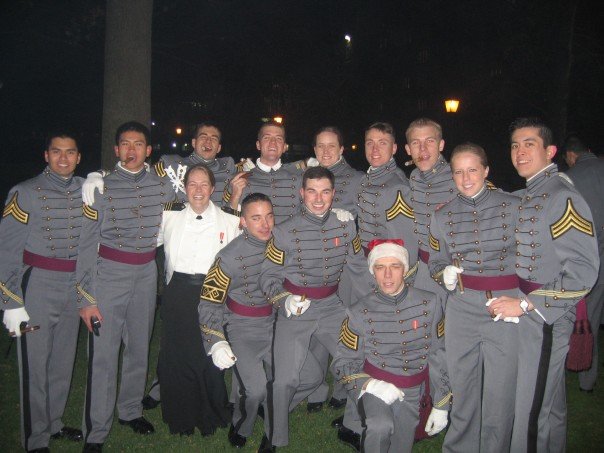
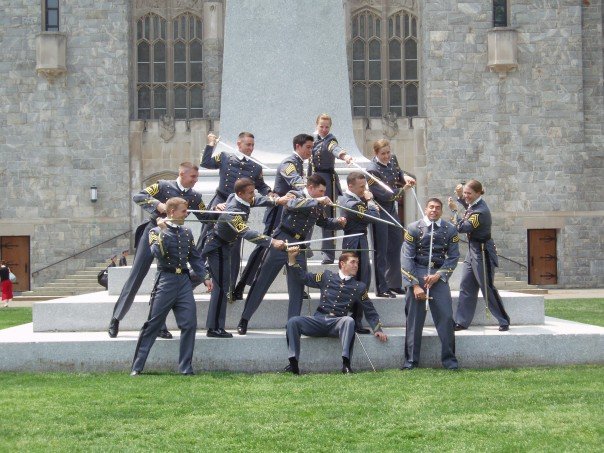
LTC Dusty Turner, PhD: Waco, Texas

- 2003-2007 BS, Operations Research: United States Military Academy (USMA)
- 2007-2008 Engineer Basic Officer Course: Fort Leonard Wood, Missouri
- 2008-2011 Platoon Leader / XO / AS3: Schofield Barracks, HI / Iraq
- 2011-2012 Engineer Captain’s Career Course: Missouri S&T
- 2012 MS, Engineering Management: Missouri S&T
- 2012-2014 Company Commander: White Sands Missile Range, NM / Afghanistan
- 2014-2016 MS, Integrated Systems Engineering: The Ohio State University
- 2016-2019 Assistant Professor: United States Military Academy, West Point
- 2019-2022 ORSA / Data Scientist: Center for Army Analysis, Ft. Belvoir
- 2022-2025 PhD, Statistical Science: Baylor University (Waco, TX)
- 2025-? Academy Professor: United States Military Academy, West Point

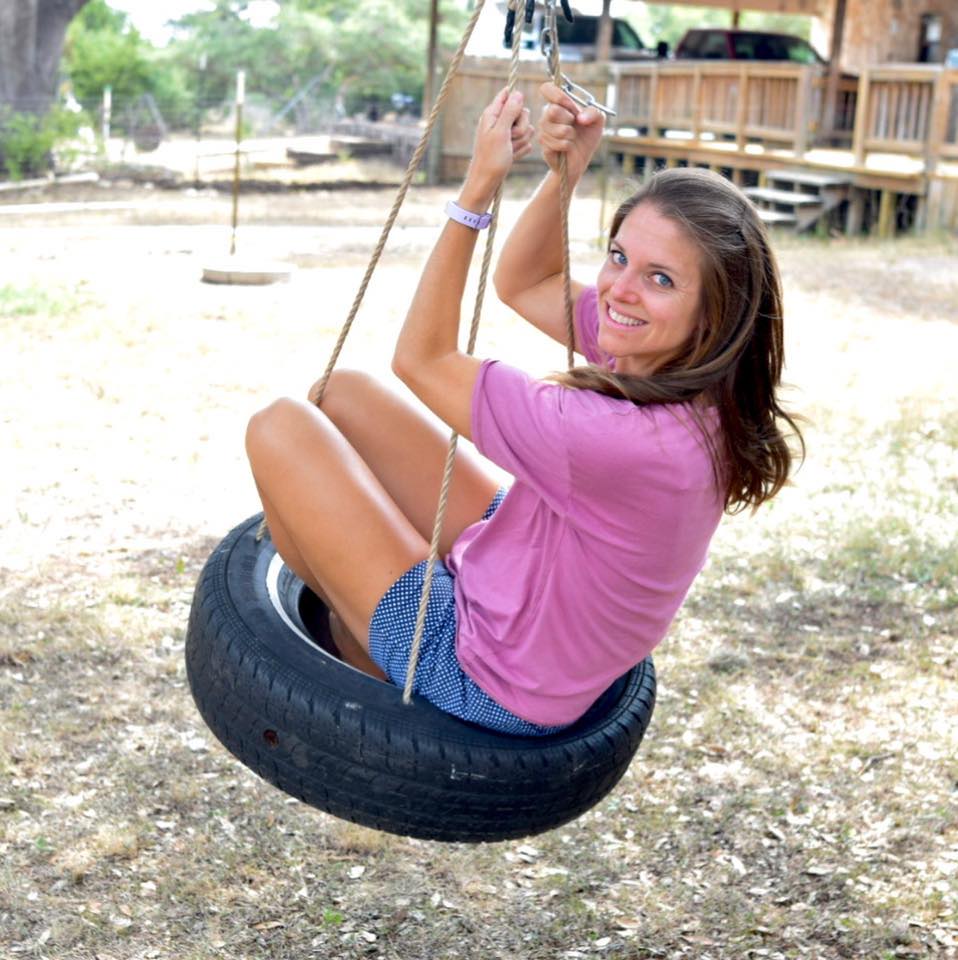
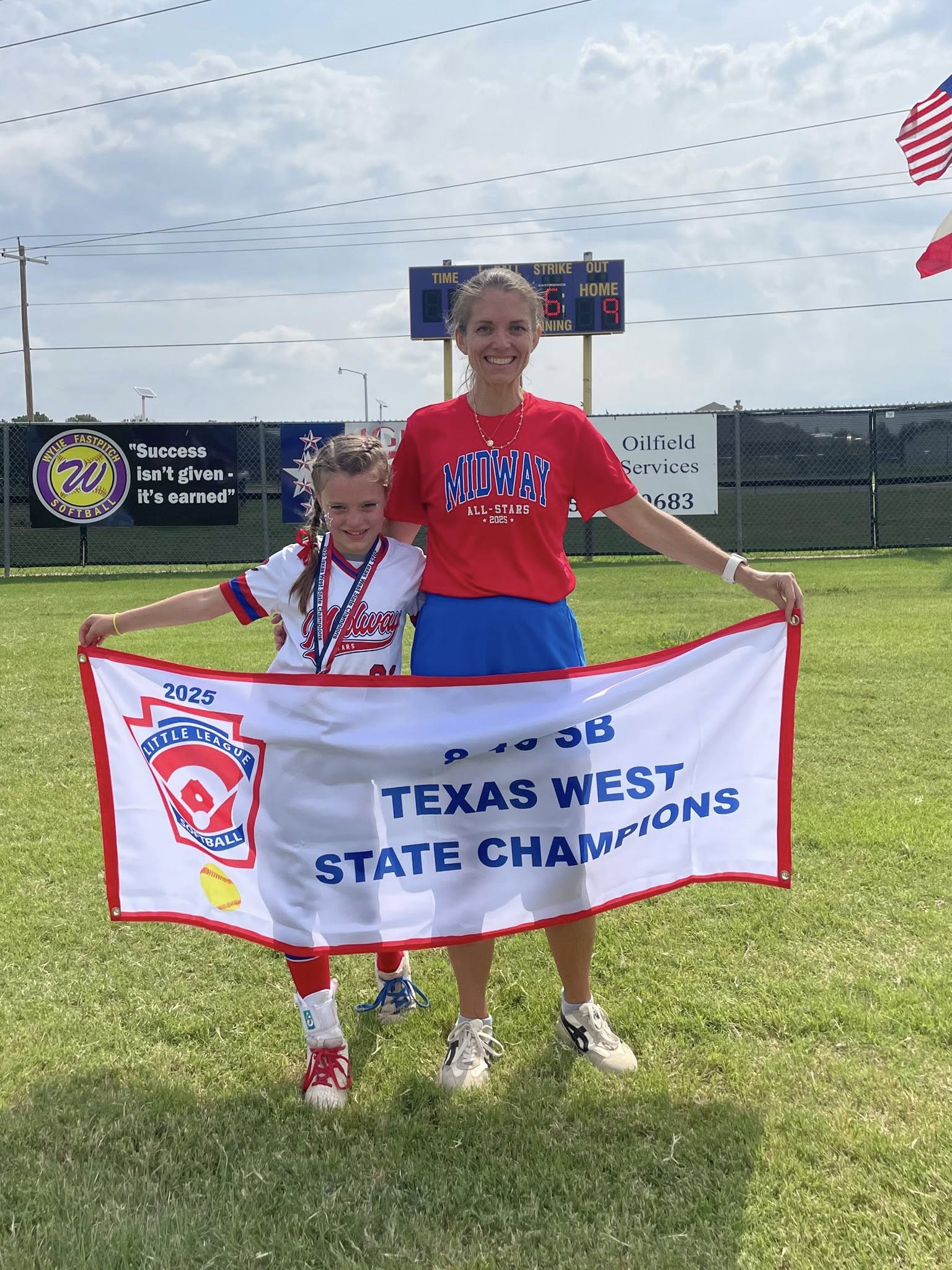
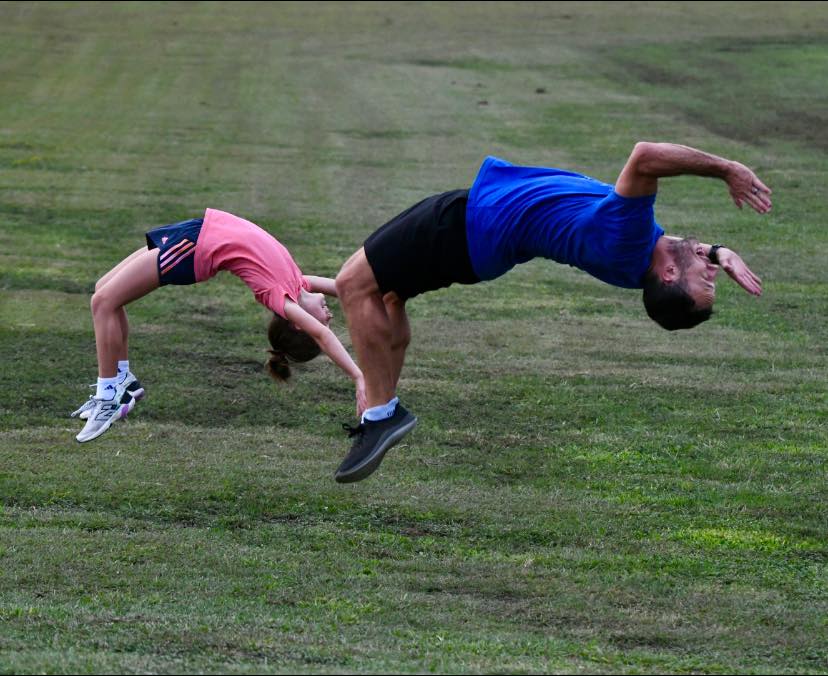
Jill: Saline, Michigan

- 2000–2004 BS, Economics: Michigan State University
- 2004–2010 Project Manager: Epic Systems
- 2011–2020 Consultant / Build Analyst (Epic Radiant & Cadence)
- 2011–2013 Epic Radiant Build Consultant: Intellistar Consulting
- 2014 Epic Radiant Build Analyst: Vonlay
- 2016–2017 Epic Radiant Build Analyst: Huron
- 2018–2020 Epic Cadence Build Analyst: Bluetree Network
- 2011–2013 Epic Radiant Build Consultant: Intellistar Consulting
- 2020–Present Solutions & Application Architect / Principal Analyst: Mayo Clinic


Cal: Las Cruces, New Mexico


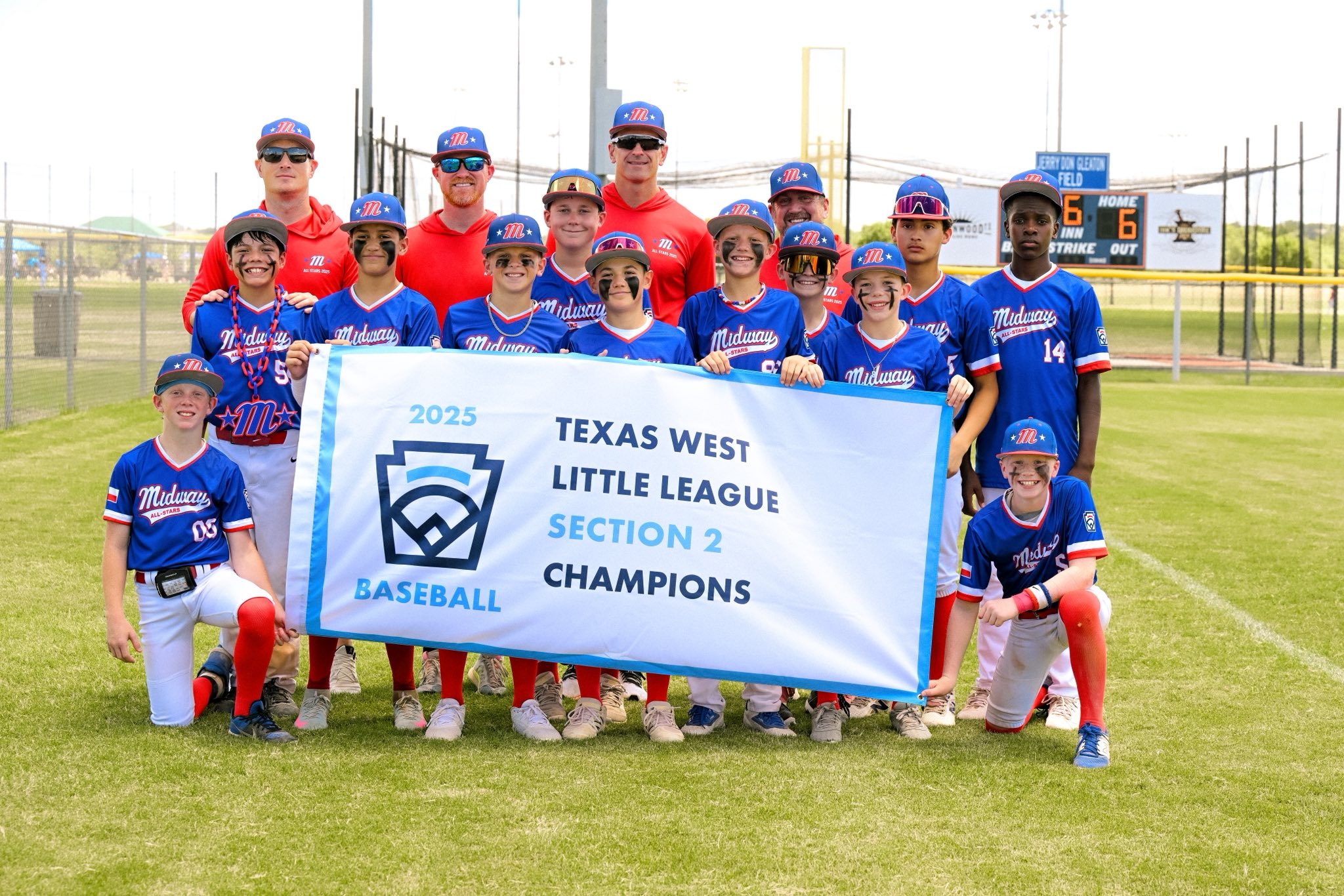

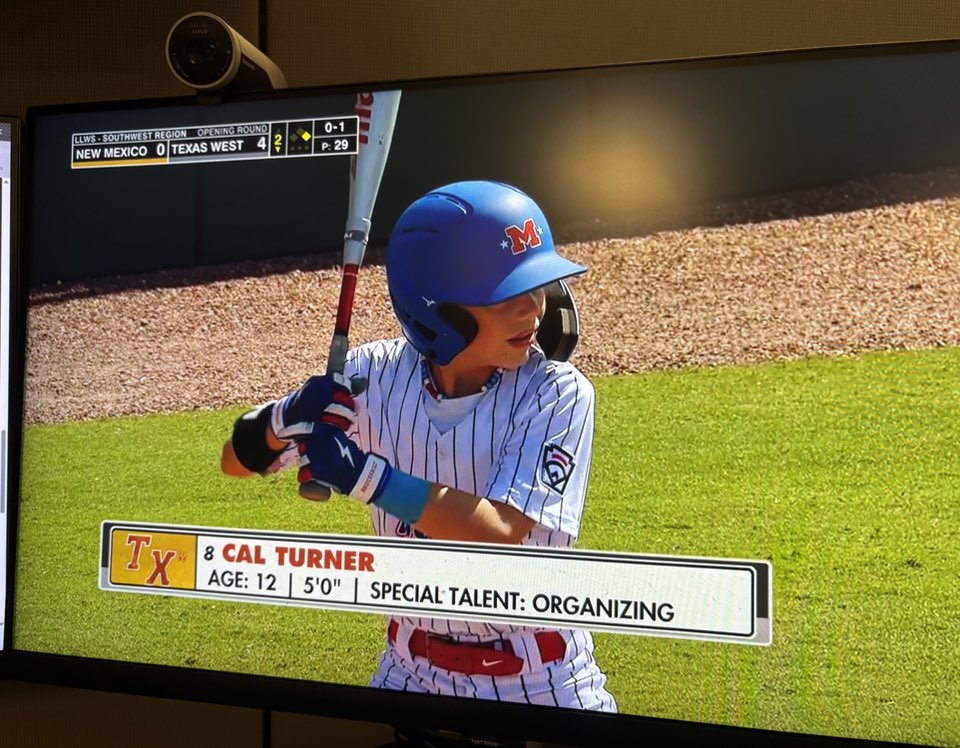
Reese: Columbus, Ohio



Expectations
What Are Your Expectations of MA206?

- Develop a Base of Knowledge
- Leverage Technology
- Communicate Concepts and Results
- Problem Solving Techniques
- Develop habits of mind
- Develop an interdisciplinary perspective
What Do You Expect of Me?
What You Can Expect from Me
- Arrive prepared for each lesson
- Encourage independent thinking
- Maintain professionalism and respect at all times
- Uphold the values of the Corps and our institution
- Clear guidance and expectations for assignments
- Be a professional mentor
- Make Mistakes
Expectations I Have for You
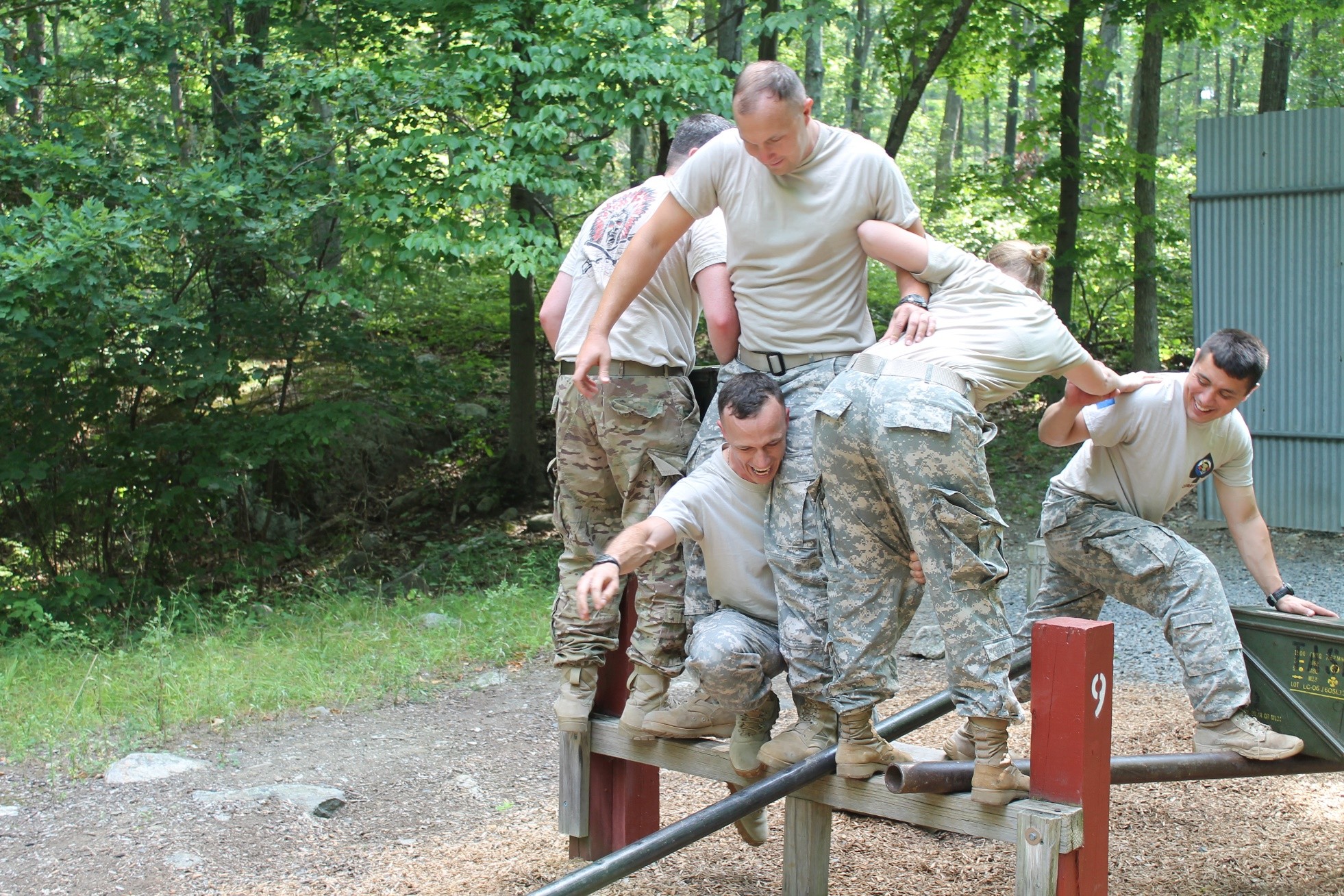
- Be responsible for your learning
- Arrive prepared for each lesson
- Engage actively in discussions and exercises
- Maintain professionalism and respect at all times
- Uphold the values of the Corps and our institution - you are junior members of this profession
- Communicate early if challenges arise
- Make mistakes
Class Rules
- Computers will only be used for course materials only
- No food or gum allowed in the classroom
- Only drinks in spill-proof containers are allowed
- Leave bags, backpacks, coats, and hats in the hallway
- Stay awake in class. Stand up if you are tired
- Arrive on time and do not start packing up before I dismiss the class
- Be respectful when others are speaking
- Support the section marcher
Course Overview / Admin
MA206 Story
- Probability
- Foundations: preliminaries, dataset exploration, tidyverse basics
- Core Probability: principles, conditional probability, rules of random variables
- Random Variables: discrete, continuous, and named distributions
- Foundations: preliminaries, dataset exploration, tidyverse basics
- Statistical Tests
- One-sample tests: one proportion Z-test, one mean T-test
- Confidence Intervals: categorical and quantitative data
- Comparative tests: two proportion Z-test, two mean T-test, paired data
- Broader Concepts: generalization, causation, and investigation labs
- One-sample tests: one proportion Z-test, one mean T-test
- Regression
- Correlation & Simple Linear Regression
- Multiple Linear Regression (I–III)
- Applications: project work, presentations, writer’s workshop, course review
- Correlation & Simple Linear Regression
Course Support
- Canvas
- Calendar (Day 1) (Day 2)
- Book: Introduction to Statistical Investigations (Digital or hard copy authorized)
- Course Guide
- Course Admin
- Specific Help / Instructions
- R Code
- Course Admin
- Graded Assignments
Note
| Event | Points |
|---|---|
| Day 0 Assignment | 15 |
| Generative AI Certification | 25 |
| Exploration Exercises (6 @ 10 points each) | 60 |
| Statistical Investigation Labs: - SIL 1 (25) - SIL 2 (25) |
50 |
| WPR 1 | 125 |
| WPR 2 | 140 |
| Course Project: - Milestone 1 – Setup and Data (25) - Milestone 2 – EDA (25) - Milestone 3 – Intro & Academic Articles (30) - Milestone 4 – Literature Review (25) - Milestone 5 – Methodology (30) - Milestone 6 – Results, Discussion, Conclusion (60) - In-Progress Review (20) - Presentation (50) - Milestone 7 – Writer’s Workshop (25) - Final Turn In (30) |
300 |
| TEE | 285 |
| TOTAL | 1000 |
- Project
- A note on course grades
- Where to get this presentation
Note
For assignments worth less than 20 points that are turned in late:
50% reduction if turned in before Lesson 30 For assignments turned in late worth 20 points or more:
10% reduction per day until assignment is worth 0 points (10 days late)
Mandatory and Important Briefings
Lesson 1
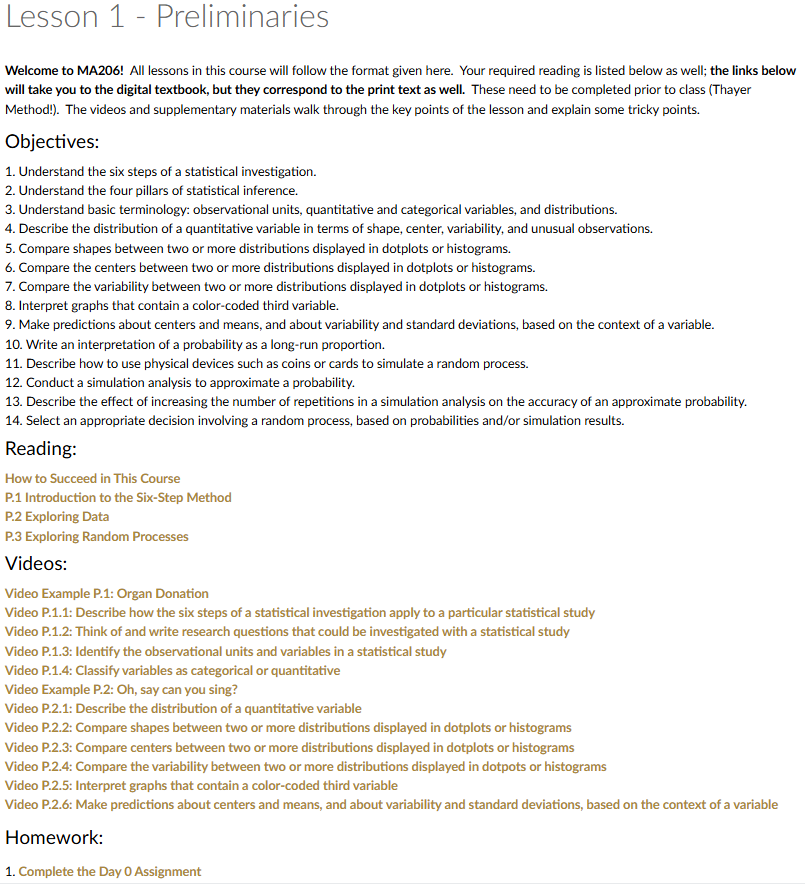
How I would have prepared for this lesson:
- Go to Lesson 1 on Canvas
- Note the objectives
- Do the reading
- Watch the videos
- Note the Course Guide
- Do the Homework (If applicable)
The Six-Step Method
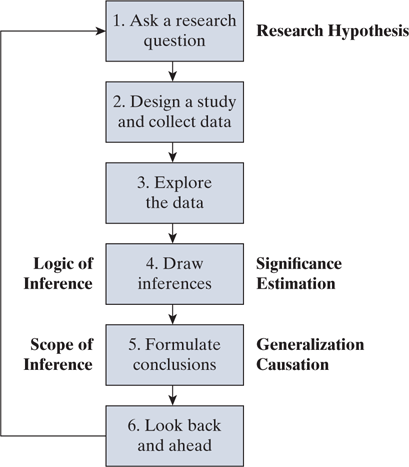
Example 1: Basketball Heights
Ask a question
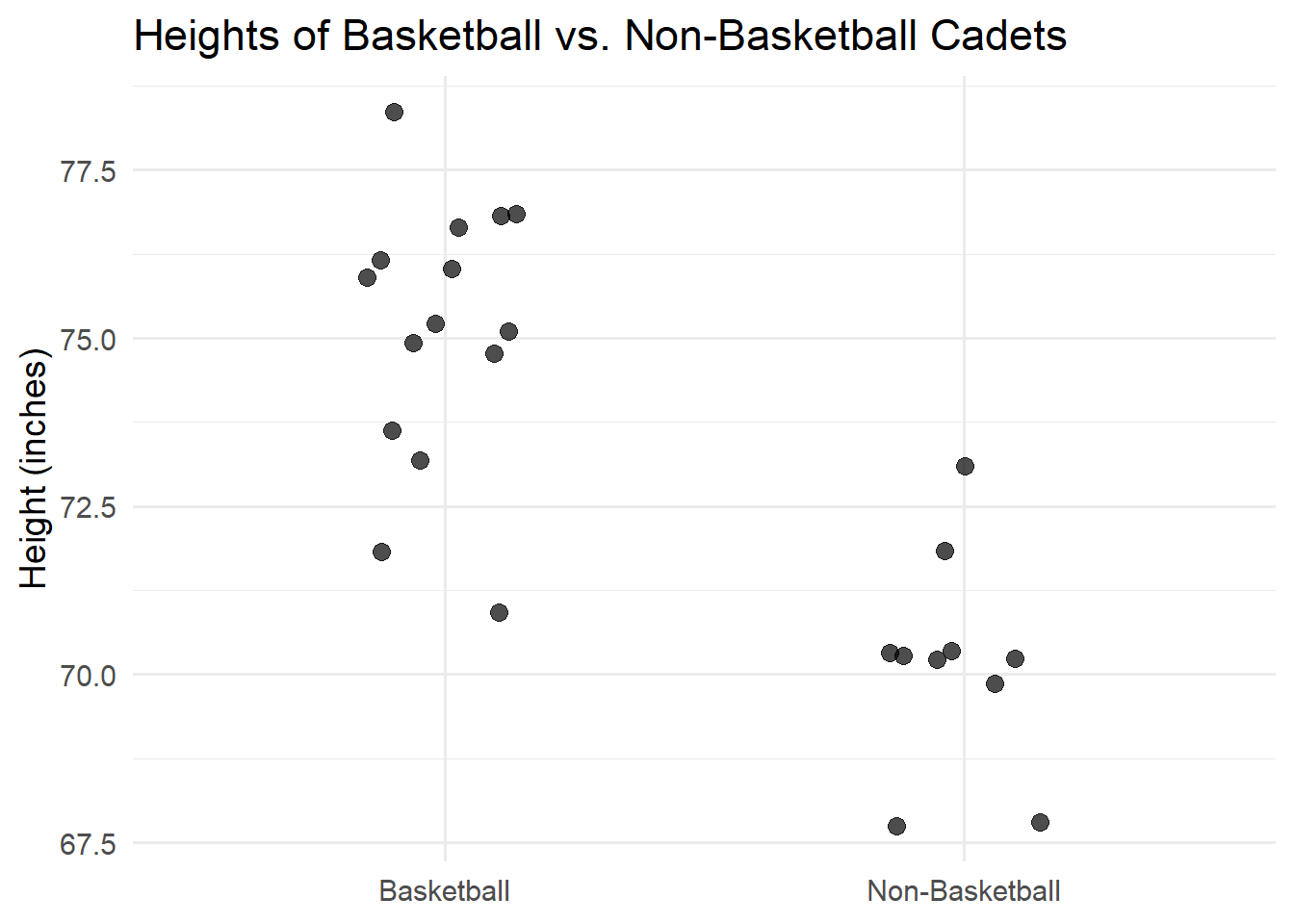
Do basketball cadets tend to be taller than cadets who aren’t on the basketball team?Design a study and collect data
Measure the heights of some basketball cadets and some non-basketball cadets.
Basketball cadets: 71, 72, 73, 74, 75, 75, 75, 75, 76, 76, 76, 77, 77, 77, 78 Non-basketball cadets: 68, 68, 70, 70, 70, 70, 70, 70, 72, 73- Explore the data
Average basketball cadet height: 75.1 in
Average non-basketball cadet height: 70.1 in
Draw inferences
The basketball group is taller by about 5 inches in this sample.Formulate conclusions
Looks like basketball cadets are taller.Look back and ahead
You could improve this by measuring more cadets or using a statistical test.
Example 2: The Monty Hall Problem
Ask a question
If the host opens a goat door, are you better off sticking with your first door or switching to the other unopened door?Design a study and collect data
We simulate the game many times and record whether “stay” or “switch” wins the car.Explore the data
Draw inferences
Formulate conclusions
Look back and ahead
Before you leave
Today:
- Any questions for me?
Lesson 2
Upcoming Graded Events
- Project Milestone 1: Due 22 Aug (Friday) All Sections - Read through this and come to class with questions
- GenAI Certification: Due 25 August (Monday) All Sections